
Strengthening its integrated sea logistics solutions, enhancing to infrastructure services
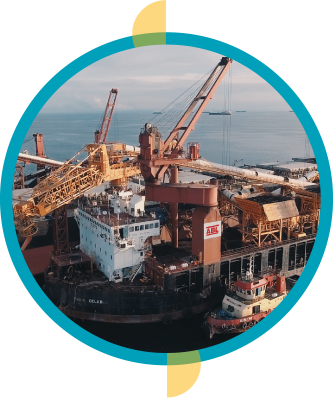
PT Asian Bulk Logistics (ABL) has managed to integrate sea logistics and transportation services from barging, stevedoring, transshipment to ocean-going vessels for the country’s mining industry.
Now, ABL is developing its first coal port management that would pave way for the company to promote major efficiencies of logistic costs in a whole supply chain since coal commodity was entered the port until being shipping to export destination countries.
The planned port management is expected to start operation in the third quarter of this year with the projected capacity of reaching 5 million tons annually.
“The next optimization target is in port management this year.
We expect the operational of (port management) would be by the third quarter of 2019. It means we would have an integrated services from port to barging, transshipment and floating crane before being transferred to mother vessel,” ABL’s President Director, Ika Bethari told CoalAsia recently in her office.
“We believe such integrated services would improve the whole value chain and reducing the operation cost. The integration will be one of our competitive advantage.
”Currently, ABL has tug-and barge capacity of 55 million tons per year, floating crane of between 20 million tons and 25 million tons per year with stevedoring of 10 million tons per year.
Now, ABL is developing its first coal port management that would pave way for the company to promote major efficiencies of logistic costs in a whole supply chain since coal commodity was entered the port until being shipping to export destination countries.
The planned port management is expected to start operation in the third quarter of this year with the projected capacity of reaching 5 million tons annually.
“The next optimization target is in port management this year.
We expect the operational of (port management) would be by the third quarter of 2019. It means we would have an integrated services from port to barging, transshipment and floating crane before being transferred to mother vessel,” ABL’s President Director, Ika Bethari told CoalAsia recently in her office.
“We believe such integrated services would improve the whole value chain and reducing the operation cost. The integration will be one of our competitive advantage.
”Currently, ABL has tug-and barge capacity of 55 million tons per year, floating crane of between 20 million tons and 25 million tons per year with stevedoring of 10 million tons per year.
Established in Jakarta in 2010, ABL with large presence in East Kalimantan has recently changed hands and is now fully owned and managed in Indonesia.
Since its initial establishment,
ABL has been mostly focused on the transshipment of coal from barges into Ocean Going Vessels, building, owning and operating four Cargo Transfer Ships (CTS), all designed with a cargo handling system made by heavy duty cranes, deck hoppers, conveyor system equipped with sampling system and metal detectors and shiploaders.
The company serves some large and most reputable coal miners and traders in the commodities market.
Ika said that the integration of floating cranes and barging management increased the productivity of floating crane to between 40,000 tons and 48,000 tons of coal per day per floating crane from the previous of only 30,000 tons per day.
She said that before the integration, the ABL’s floating crane secured only less than 4 million tons of coal per year, compared to its optimum capacity of 6 million tons per year. “We then see the need to expand the integration with other sea supply chain in order to optimize the services. Still in 2019, we secure to optimize stevedoring by operating the heavy equipment both in barging and mother vessels.”
According to Ika, if a company only focuses on floating crane service, while tug-and-barging services are handled by other parties, there will be potential of underperformance that eventually affects the whole value chains.
According to Ika, the potential of floating crane business is still promising in Indonesia since the existing country’s maximum capacity of coal terminals is only 131 million tons per year, far lower than the planned coal export of 362 million tons this year.
Since its initial establishment,
ABL has been mostly focused on the transshipment of coal from barges into Ocean Going Vessels, building, owning and operating four Cargo Transfer Ships (CTS), all designed with a cargo handling system made by heavy duty cranes, deck hoppers, conveyor system equipped with sampling system and metal detectors and shiploaders.
The company serves some large and most reputable coal miners and traders in the commodities market.
Ika said that the integration of floating cranes and barging management increased the productivity of floating crane to between 40,000 tons and 48,000 tons of coal per day per floating crane from the previous of only 30,000 tons per day.
She said that before the integration, the ABL’s floating crane secured only less than 4 million tons of coal per year, compared to its optimum capacity of 6 million tons per year. “We then see the need to expand the integration with other sea supply chain in order to optimize the services. Still in 2019, we secure to optimize stevedoring by operating the heavy equipment both in barging and mother vessels.”
According to Ika, if a company only focuses on floating crane service, while tug-and-barging services are handled by other parties, there will be potential of underperformance that eventually affects the whole value chains.
According to Ika, the potential of floating crane business is still promising in Indonesia since the existing country’s maximum capacity of coal terminals is only 131 million tons per year, far lower than the planned coal export of 362 million tons this year.
“We see the country’s coal reserve is still abundant. Then, we also see there is a limitation of developing permanent infrastructures of coal terminals. Therefore, the choice now is going to use the floating crane,” Ika, who has over 8 years of experience in marine and sea logistic Industry, said. Before joining the sea logistic industry, Ika gained years of experience on coal mining as she worked in the mining contracting company and coal mining company.
Indonesia is currently home to the world’s largest thermal coal exporter. The country produced 528 million tons in 2018 with most of them for export.
In 2019, the government sets coal production target at 490 million tons, of which about 362 million ton would be for export. The country allocates 128 million tons for domestic market, particularly for the coal-fired power plants. The Ministry of Energy and Mineral Resources recently reported a significant increase of the country’s coal reserve, reaching 37 billion tons as of September 2018, up by 48 percent from 25 billion tons in previous year. The country’s coal resources also increased to 166 billion tons from the previous record of 125 billion tons. Strategic consolidator Ika admitted that the company’s achievement to integrate sea logistics and transportation services was also largely contributed by strategic partnership with others logistic providers.
“Under the working concept of strategic consolidator and operator of sea logistic and Infrastructure, we enter strategic partnership with other players in the market, so they don’t see us (ABL) as their competitors,“ she said. ABL is currently in discussing with both local and foreign companies having floating cranes.
Indonesia is currently home to the world’s largest thermal coal exporter. The country produced 528 million tons in 2018 with most of them for export.
In 2019, the government sets coal production target at 490 million tons, of which about 362 million ton would be for export. The country allocates 128 million tons for domestic market, particularly for the coal-fired power plants. The Ministry of Energy and Mineral Resources recently reported a significant increase of the country’s coal reserve, reaching 37 billion tons as of September 2018, up by 48 percent from 25 billion tons in previous year. The country’s coal resources also increased to 166 billion tons from the previous record of 125 billion tons. Strategic consolidator Ika admitted that the company’s achievement to integrate sea logistics and transportation services was also largely contributed by strategic partnership with others logistic providers.
“Under the working concept of strategic consolidator and operator of sea logistic and Infrastructure, we enter strategic partnership with other players in the market, so they don’t see us (ABL) as their competitors,“ she said. ABL is currently in discussing with both local and foreign companies having floating cranes.
“We plan to enter strategic partnership with local and foreign companies so we can operate their floating cranes under the management of ABL,” she said.
“We also plan to develop the strategic consolidator policy to integrate the mining- related infrastructures in offshore such as hauling, canal and blending facility.”
Ika said the ABL plans to start feasibility study to assess potential of integration of logistic and infrastructures in offshore this year. “Our big dream is to integrate services in onshore and offshore (for mining and commodities industry,” Ika said. ABL, which received a national long- term rating of ‘BBB (idn) from Fitch, has recently secured fresh financing from the country’s state-owned bank of US$75 million.
PT Asian Bulk Logistics is certified, since November 2017, in compliance with BS OHSAS 18001:2007, an international standard which helps organizations to implement a sound occupational health and safety Management System, so they can reduce risks to personnel and put the right safety measures in place.
By complying with BS OHSAS 18001: 2007, PT Asian Bulk Logistics can improve its overall working environment and the conditions of employees, while performing in line with the Company’s policies.
BS OHSAS 18001:2007 is a worldwide recognized reference for the management of safety and health at work and in 2019 received ISO 450001 ISM code & ISPS code certification, with also a return of the Company’s image towards its customers and contractors. ABL is a member of the Indonesian National Shipowners’ Association (INSA) and a member of BIMCO — the largest of the international shipping associations representing Ship-owners.
“We also plan to develop the strategic consolidator policy to integrate the mining- related infrastructures in offshore such as hauling, canal and blending facility.”
Ika said the ABL plans to start feasibility study to assess potential of integration of logistic and infrastructures in offshore this year. “Our big dream is to integrate services in onshore and offshore (for mining and commodities industry,” Ika said. ABL, which received a national long- term rating of ‘BBB (idn) from Fitch, has recently secured fresh financing from the country’s state-owned bank of US$75 million.
PT Asian Bulk Logistics is certified, since November 2017, in compliance with BS OHSAS 18001:2007, an international standard which helps organizations to implement a sound occupational health and safety Management System, so they can reduce risks to personnel and put the right safety measures in place.
By complying with BS OHSAS 18001: 2007, PT Asian Bulk Logistics can improve its overall working environment and the conditions of employees, while performing in line with the Company’s policies.
BS OHSAS 18001:2007 is a worldwide recognized reference for the management of safety and health at work and in 2019 received ISO 450001 ISM code & ISPS code certification, with also a return of the Company’s image towards its customers and contractors. ABL is a member of the Indonesian National Shipowners’ Association (INSA) and a member of BIMCO — the largest of the international shipping associations representing Ship-owners.